
2026 Nissan Rogue vs. 2026 Toyota RAV4: Two Compact SUVs, Two Ways to Go Further
September 30 2026,
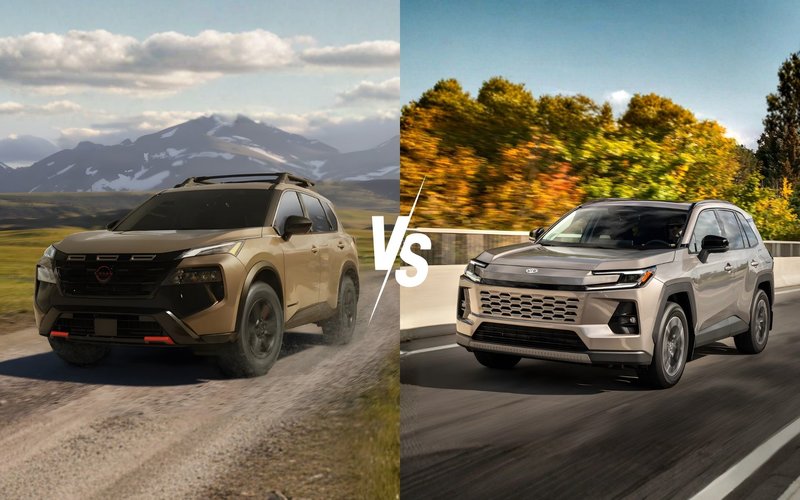
The compact SUV segment is changing quickly, and the 2026 Nissan Rogue and 2026 Toyota RAV4 show two different approaches to everyday driving. Both offer five-passenger seating, all-wheel-drive capability, modern technology, and practical cargo space. But under the hood, the story is quite different.
The 2026 Rogue continues with Nissan's turbocharged gasoline powertrain, while the redesigned 2026 RAV4 moves to an all-hybrid lineup in Canada, with plug-in hybrid models also available.
For drivers around North Vancouver, that makes this comparison about more than exterior styling. It comes down to how you want your SUV to perform, how you want to use fuel, and what technology matters most to you.
Build & Price your own 2026 Nissan Kicks
Turbocharged Versatility vs. Electrified Power
The 2026 Rogue uses a 1.5-litre VC-Turbo® three-cylinder engine producing 201 horsepower and 225 lb-ft of torque. It works with an Xtronic CVT and Intelligent All-Wheel Drive. Nissan also gives Rogue drivers five drive modes: Standard, Eco, Sport, Snow, and Off-Road.
The 2026 RAV4 takes a different path. Every Canadian RAV4 Hybrid uses a 2.5-litre four-cylinder hybrid powertrain producing 236 net system horsepower, with AWD standard. Toyota also offers RAV4 Plug-in Hybrid models, which produce up to 324 horsepower and offer up to 80 km of manufacturer-estimated all-electric driving range.
Comparison: The Rogue sticks with a turbocharged gasoline engine and gives drivers selectable drive modes, while the RAV4 makes electrification the foundation of its Canadian lineup.
Fuel Efficiency: A Different Kind of Economy
The Rogue's VC-Turbo engine is designed to balance performance and efficiency. Nissan Canada lists fuel consumption for the 2026 Rogue at approximately 8.4 L/100 km in the city and 6.8 L/100 km on the highway, depending on the published specification.
The RAV4 Hybrid's numbers are lower. The 2026 RAV4 LE AWD is rated at 5.1 L/100 km city, 6.0 L/100 km highway, and 5.5 L/100 km combined. Other grades range from 5.7 to 6.2 L/100 km combined.
Comparison: The Rogue offers competitive fuel consumption for a turbocharged gasoline SUV, while the RAV4 Hybrid is designed around lower fuel consumption through its gas-electric powertrain.
For drivers who regularly cover long distances around Metro Vancouver, fuel efficiency can become an important part of the ownership equation.
AWD for Changing North Vancouver Conditions
Rainy roads, steep streets, and trips toward the mountains make traction an important consideration for North Shore drivers.
The 2026 Rogue comes with Intelligent All-Wheel Drive, and its drive-mode dial includes Snow and Off-Road settings alongside Standard, Eco, and Sport.
Toyota takes a simpler approach for the Canadian RAV4 lineup: AWD is standard on all 2026 RAV4 models. Toyota says the system is designed to provide traction, handling, and stability across different conditions.
Comparison: Both SUVs offer AWD, but the Rogue combines it with multiple selectable drive modes, while Toyota makes AWD standard throughout the RAV4 Canadian lineup.
More Than Just a Commuter
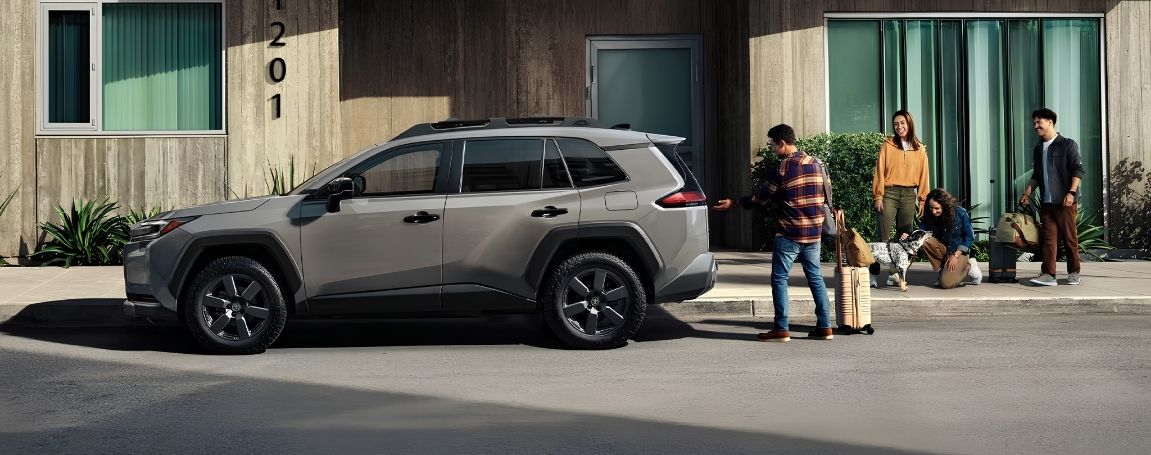
Both SUVs are designed to handle more than the daily drive.
The Rogue offers 1,028 litres of cargo capacity behind the second row and up to 2,064 litres with the rear seats folded. It also has a maximum towing capacity of 680 kg (1,500 lb) on the specification cited here.
The RAV4 provides 1,070 litres of cargo capacity behind the second row, according to Toyota Canada's product summary. Select RAV4 grades can tow up to 3,500 lb (1,588 kg).
Comparison: The Rogue provides generous cargo flexibility for everyday family use, while select RAV4 grades offer substantially greater published towing capacity.
That difference could matter if your weekend plans include a small trailer, recreational equipment, or other towable gear.
Technology Takes Centre Stage
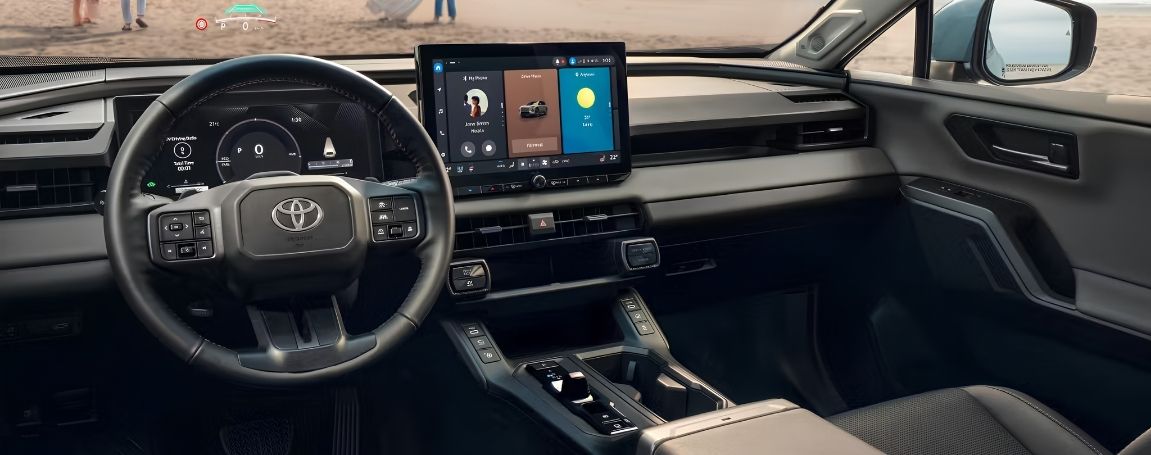
The 2026 Rogue offers technology that ranges from an 8-inch NissanConnect touchscreen on the S grade to larger displays on higher trims. Depending on the configuration, Rogue can also offer Google built-in, wireless charging, a 12.3-inch digital dashboard, and premium audio.
The redesigned 2026 RAV4 receives a significant technology update. Even the LE includes a 10.5-inch touchscreen and 12.3-inch multi-information display, along with Toyota Multimedia and connected services.
Comparison: The Rogue offers a wide range of technology as you move through its trims, while the new RAV4 brings larger digital displays and its latest multimedia system into the redesigned lineup.
Safety Technology for Everyday Confidence
Nissan equips the 2026 Rogue with several driver-assistance features, including Intelligent Emergency Braking with Pedestrian Detection, Intersection Assist, Blind Spot Warning, Rear Cross Traffic Alert, Lane Departure Warning, Intelligent Forward Collision Warning, and High Beam Assist.
The 2026 RAV4 introduces Toyota Safety Sense 4.0. Toyota Canada also lists Blind Spot Monitor with Rear Cross Traffic Alert as standard, while the updated safety system brings improved detection capabilities to features such as the Pre-Collision System and Lane Tracing Assist.
Comparison: Both SUVs include a broad range of driver-assistance technologies, but each uses its manufacturer's latest safety system to support drivers.
2026 Nissan Rogue vs. 2026 Toyota RAV4: Quick Comparison
|
Feature |
2026 Nissan Rogue |
2026 Toyota RAV4 |
|
Powertrain |
1.5-litre VC-Turbo |
2.5-litre Hybrid |
|
Power |
201 hp |
236 net hp |
|
AWD |
Intelligent AWD |
Standard AWD |
|
Combined fuel economy |
Approx. 7.6 L/100 km* |
From 5.5 L/100 km |
|
Seating |
5 |
5 |
|
Max cargo capacity |
Up to 2,098 litres |
1,070 litres behind 2nd row |
|
Max towing |
1500 lbs |
Up to 3,500 lbs |
|
PHEV available |
Yes, separate Rogue PHEV |
Yes |
*Fuel economy varies by source, trim, and configuration; Nissan's detailed specifications list 7.6 L/100 km combined for the S AWD configuration.
Which SUV Matches Your Driving Style?
The 2026 Nissan Rogue remains a turbocharged compact SUV built around responsive performance, flexible drive modes, Intelligent AWD, and practical everyday features. Its VC-Turbo engine produces 201 horsepower and 225 lb-ft of torque, while its available higher trims add more premium technology and comfort features.
The 2026 Toyota RAV4 enters its sixth generation with a major change for Canadian buyers: the lineup is now fully electrified, combining hybrid and plug-in hybrid models. Its standard hybrid system produces 236 net horsepower, while the RAV4 Plug-in Hybrid reaches up to 324 horsepower and up to 80 km of electric range.
The key comparison is straightforward: Rogue gives you a turbocharged gasoline experience with selectable drive modes, while RAV4 puts hybrid technology and standard AWD at the centre of the lineup.
If you're comparing compact SUVs in North Vancouver, North Vancouver Nissan can help you explore the 2026 Nissan Rogue, its available trims, features, and capabilities.
